







How to Choose Optical Distribution Frame (ODF) for Network
2026-10-20
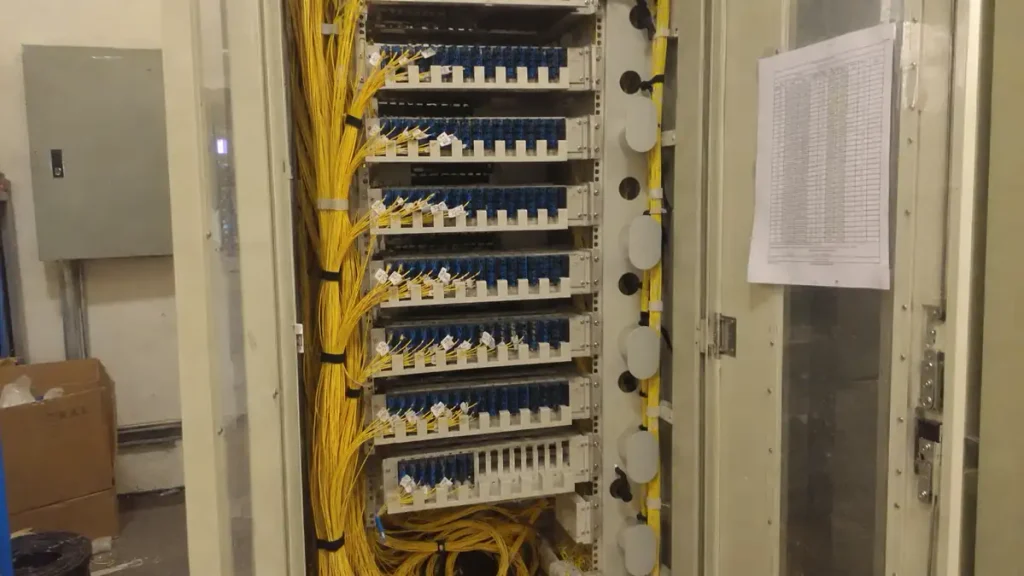
SOCTFiber supplies optical distribution frames (ODF) for fiber termination, splicing, patching, and cable management in telecom networks, FTTH central offices, and equipment rooms. Our product range covers 19-inch rack mounted ODFs, sliding drawer designs, and front-access distribution frames with capacities from 12 to 144 fibers.
We offer 24-core 1U and 48-core 2U drawer-type models, together with a multi-capacity front-access ODF series. Each configuration addresses different requirements for rack space, fiber capacity, cable routing, and maintenance access.
When selecting an ODF for a network project, we recommend checking more than the nominal fiber count. Adapter interfaces, splice tray capacity, cable entry positions, cabinet dimensions, and supplied accessories all affect installation and purchasing costs. Our team reviews these specifications to help customers identify a suitable configuration before ordering.
Our Optical Distribution Frame Products
Our ODF range includes compact 1U fiber termination units, 2U drawer-type distribution frames, and higher-capacity front-access designs. The following specifications are based on our published product models.
| Product / Model | Fiber Capacity | Dimensions (W × D × H) | Structure | Product Details |
|---|---|---|---|---|
| SODF1U24F | 24 fibers | 482 × 305 × 1U mm | 19-inch rack mount, sliding drawer, one 24-fiber splice tray | 24 Core Rack Mount ODF |
| SODF2U48F | 48 fibers | 482 × 305 × 2U mm | 19-inch rack mount, sliding drawer, two 24-fiber splice trays | 48 Core Rack Mount ODF |
| Front-Access ODF Series | 12 / 24 / 48 / 144 fibers | 482 mm width × 260 mm depth; model-dependent height | Front-access fiber termination and distribution structure | 12–144 Core ODF Series |
The selected ODF should match the project drawing and bill of materials. Adapter population, pigtails, splice trays, and mounting accessories should be confirmed separately where different configurations are available.
How to Choose an Optical Distribution Frame for Your Project
1. Select the Required Fiber Capacity
Fiber capacity is usually the first specification we review. However, the maximum capacity of an ODF should not be confused with the number of fibers that will be terminated during the initial installation.
Our 24-core SODF1U24F uses a 1U drawer-type structure with one 24-fiber splice tray. For projects requiring 48 fiber terminations, the SODF2U48F provides two 24-fiber splice trays within a 2U housing.
For larger installations, our front-access ODF series offers 12-, 24-, 48-, and 144-fiber configurations. The required capacity should account for current connections, spare terminations, and the available rack space.
Where a project specifies 72 or 96 fibers, we recommend submitting the target capacity and cabinet drawing so that we can check the appropriate product configuration rather than assuming that every intermediate capacity is available as a standard model.
2. Confirm the Rack Mounting Dimensions
Our SODF1U24F and SODF2U48F are designed for nominal 19-inch rack mounting. Both models have a width of 482 mm and a depth of 305 mm, with 1U and 2U heights respectively.
The front-access series uses a 482 mm width and 260 mm depth. Its published dimensions vary according to capacity:
| Capacity | Height | Width | Depth |
|---|---|---|---|
| 12 fibers | 45 mm | 482 mm | 260 mm |
| 24 fibers | 45 mm | 482 mm | 260 mm |
| 48 fibers | 90 mm | 482 mm | 260 mm |
| 144 fibers | 270 mm | 482 mm | 260 mm |
Before confirming an order, we recommend checking mounting hole positions, cabinet depth, door clearance, and the space required for cable entry and maintenance. Nominal 19-inch compatibility alone does not guarantee that every enclosure will fit a particular rack.
3. Specify SC, LC, FC, or ST Adapters
Our 24-core and 48-core rack mounted ODF models support common adapter configurations, including SC, LC, FC, and ST.
For an accurate quotation, we ask customers to identify the required connector interface, UPC or APC polishing type, fiber type, adapter quantity, and pigtail specifications.
These details can significantly affect the delivered configuration. Two 48-core optical distribution frames may use the same enclosure but require different adapter plates, connector arrangements, and accessories.
We recommend confirming the complete adapter and pigtail configuration in the approved order specification.
4. Review Splice Trays and Cable Entry
Internal fiber management is an important consideration for both installation and maintenance.
Our 24-core drawer-type ODF includes one 24-fiber splice tray. The 48-core version uses two 24-fiber splice trays. Both product specifications list four cable entry ports.
The front-access ODF series uses distribution trays and a front-operation structure designed to provide access to internal fiber connections.
When reviewing a project, we recommend checking the incoming cable diameter, number of cables, entry direction, required splice capacity, and fiber routing arrangement.
These details help establish whether the proposed enclosure is suitable for the installation rather than relying only on its advertised fiber capacity.
Rack Mounted ODF vs. Front-Access ODF
We supply different ODF structures because rack space and maintenance arrangements vary between network installations.
| Selection Factor | Drawer-Type Rack Mounted ODF | Front-Access ODF |
|---|---|---|
| Available SOCTFiber configurations | 24 fibers / 1U; 48 fibers / 2U | 12, 24, 48, and 144 fibers |
| Access method | Sliding drawer | Front-side operation |
| Published depth | 305 mm | 260 mm |
| Main selection consideration | Drawer clearance and splice tray access | Front maintenance access and capacity requirements |
| Project information to confirm | Rack depth, drawer clearance, adapter population | Cabinet layout, tray arrangement, cable routing |
For cabinets with restricted rear access, a front-access arrangement may be preferable. Where a sliding tray is required for installation and maintenance, our drawer-type ODF models provide another option.
We recommend comparing the actual installation dimensions and internal configuration before selecting either design.
Optical Distribution Frame Applications
Telecommunication Equipment Rooms
Our rack mounted optical distribution frames are designed to organize fiber termination, splicing, and patching connections within telecommunications equipment racks.
For equipment room projects, the ODF should be selected together with the cabinet layout, incoming fiber cables, patch cord routing, and available maintenance space.
FTTH Central Offices
In FTTH network infrastructure, optical distribution frames provide a managed connection point for incoming optical cables and distribution fibers.
We recommend that FTTH project specifications identify the required termination capacity, adapter interface, and spare capacity before the ODF arrangement is finalized.
Fiber Network Expansion Projects
Network expansion often requires additional terminations within existing equipment rooms. Cabinet space may already be limited, making rack height and cable routing important selection factors.
Our 1U, 2U, and front-access ODF configurations allow customers to compare different arrangements against their existing installation conditions.
ODF Supply, Configuration, and Order Support
At SOCTFiber, we review optical distribution frame enquiries according to the required product model, fiber capacity, adapter configuration, accessories, and order quantity.
For our published SODF1U24F and SODF2U48F models, the listed purchasing conditions include:
- MOQ: 5 pieces.
- Published delivery range: 5–30 working days.
- Packaging: Carton boxes.
- OEM: Available for the listed models, subject to specification confirmation.
- Adapter options: SC, LC, FC, and ST.
- Fiber accessories: Pigtails and adapters according to the agreed configuration.
The applicable lead time and purchasing conditions depend on the final model, accessory requirements, and order quantity. We reconfirm these details when preparing a quotation.
For repeat or project orders, we recommend using an approved drawing and accessory list to keep the requested configuration consistent across purchasing documents and subsequent deliveries.
What We Need for an Accurate ODF Quotation
To prepare a quotation without unnecessary specification changes, please include the following information in your enquiry:
- ODF type: Rack mounted drawer-type or front-access.
- Fiber capacity: Required cores and any planned spare capacity.
- Cabinet dimensions: Rack width, available U height, mounting depth, and access limitations.
- Adapter interface: SC, LC, FC, or ST, including UPC/APC requirements.
- Fiber accessories: Pigtails, splice trays, adapters, and mounting components.
- Cable entry: Incoming cable quantity, diameter, and routing direction.
- Customization: Required labeling, packaging, or other OEM details.
- Purchasing requirements: Order quantity, destination, and requested delivery schedule.
If your project already has a technical drawing, an ODF bill of materials, or an approved reference model, please send it with your enquiry. We can use that information to review the proposed configuration and clarify the quotation scope.
Frequently Asked Questions About Optical Distribution Frames
1. How do I choose the right optical distribution frame for a fiber optic network?
Choose an optical distribution frame (ODF) based on the required fiber capacity, rack dimensions, connector type, splice tray arrangement, and maintenance access. A higher fiber count does not automatically mean a better choice if the enclosure cannot accommodate the available rack space or cable routing.
At SOCTFiber, we usually begin by reviewing the number of fibers to be terminated and the installation drawing. For example, our SODF1U24F provides 24-fiber capacity in a 1U drawer-type frame, while the SODF2U48F supports 48 fibers in a 2U configuration. For higher-capacity installations, we can review our 12–144 core front-access ODF series.
2. What is the difference between a 24 core and 48 core optical distribution frame?
The main differences are fiber termination capacity, enclosure height, and splice tray arrangement. Our 24-core SODF1U24F uses a 1U rack mounted housing with one 24-fiber splice tray. Our 48-core SODF2U48F uses a 2U housing with two 24-fiber splice trays. Both are designed for nominal 19-inch rack mounting and have a published depth of 305 mm.
We recommend the 24-core model where 24 terminations are sufficient and rack height is limited. The 48-core model is appropriate when the project requires more terminations within a single enclosure. Customers should also check expected expansion and the space required to access the sliding drawer.
3. How many ODF ports do I need for a 96 or 144 fiber network?
For a network requiring 96 or 144 individual fiber terminations, the ODF must provide sufficient termination and splicing capacity for those fibers. However, fiber capacity and front-panel port count are not always identical, especially when duplex adapters are used. Connector layout, spare fibers, and future expansion should be specified separately.
Our published front-access ODF series includes a 144-fiber configuration. For a 96-fiber requirement, we recommend sending us the proposed port arrangement and cabinet dimensions so we can check the appropriate configuration. We do not recommend selecting a frame solely by its maximum advertised fiber count.
4. Will a 19-inch rack mounted ODF fit my existing network cabinet?
A 19-inch rack mounted ODF must match the cabinet's mounting arrangement, usable depth, available U height, and cable clearance. A nominal 19-inch mounting width does not guarantee compatibility with every cabinet.
Our SODF1U24F and SODF2U48F have published dimensions of 482 mm in width and 305 mm in depth, with heights of 1U and 2U respectively. Before confirming an order, we recommend checking the mounting positions, internal cabinet depth, drawer clearance, and incoming cable routing. Customers can send us their rack drawings when installation space is restricted.
5. Should I choose SC or LC adapters for an optical distribution frame?
Choose SC or LC adapters according to the existing connector interface, patching density, and network equipment requirements. LC connectors are often selected where higher connection density is needed, while SC connectors remain common in many telecom and FTTH installations. The selected interface must also match the required UPC or APC polishing type.
Our 24-core and 48-core drawer-type ODF models list SC, LC, FC, and ST adapter options. We ask customers to specify the connector type, fiber type, adapter quantity, and required pigtails before quotation. The exact adapter arrangement should be confirmed against the selected ODF model rather than assuming all connector layouts are interchangeable.
6. What factors affect optical distribution frame prices?
Optical distribution frame prices depend on fiber capacity, enclosure design, adapter population, splice trays, pigtails, mounting accessories, customization, and order quantity. An empty ODF chassis and a fully populated ODF should not be compared as equivalent products.
When preparing quotations at SOCTFiber, we review the required model and accessory configuration before confirming the price. For example, two 48-core ODF enquiries may require different connector types, pigtail quantities, and packaging arrangements. We recommend comparing supplier quotations using the same technical drawing and bill of materials to avoid missing components or unexpected purchasing costs.
7. How do I evaluate an optical distribution frame manufacturer or supplier?
When comparing an ODF manufacturer or supplier, check whether the offered product has documented dimensions, fiber capacity, connector options, splice tray specifications, and a clearly defined accessory list. The supplier should also be able to clarify OEM requirements, packaging, minimum order quantity, and delivery conditions before an order is placed.
At SOCTFiber, our published SODF1U24F and SODF2U48F specifications identify the rack dimensions, splice tray arrangements, and available adapter types. The listed MOQ is five pieces, with a published delivery range of 5–30 working days. We reconfirm these conditions according to the selected configuration and order quantity. For project procurement, we recommend approving the technical drawing and accessory list before bulk ordering.
8. What specifications should I send to get an accurate optical distribution frame quotation?
For an accurate optical distribution frame quotation, provide the required fiber capacity, rack dimensions, ODF structure, connector type, splice tray configuration, pigtail requirements, cable entry arrangement, and purchasing quantity. Include the delivery destination and any OEM requirements where applicable.
We can review an existing product drawing, technical specification, or bill of materials to clarify the required configuration. This is particularly useful when ordering ODFs for multiple equipment rooms or network installation sites where the same accessory arrangement must be maintained.
For available ODF models and configurations, view our optical distribution frame products or send us your project specifications for quotation.
Please send us the required fiber capacity, rack dimensions, connector configuration, order quantity, and any available drawings. Our team will review the product specifications and confirm the applicable quotation details.
Email: market@soctfiber.com
