

For many ISPs, system integrators and utility companies, the most economical way to extend fiber is still on existing poles. Aerial deployment avoids heavy civil work, shortens project schedules and helps keep the budget under control.
However, once the cable is hanging in the air, the environment stops being friendly:
- Summer heat and winter frost
- Wind, ice and long-term UV exposure
- Rodents, birds and accidental mechanical damage
- Extra tension on long spans and at road or river crossings
If the cable structure is not robust enough, small problems in the first year become expensive failures in the third or fifth year. This is where GYXTW aerial armored fiber optic cable has built a solid reputation.
What Makes GYXTW Different?
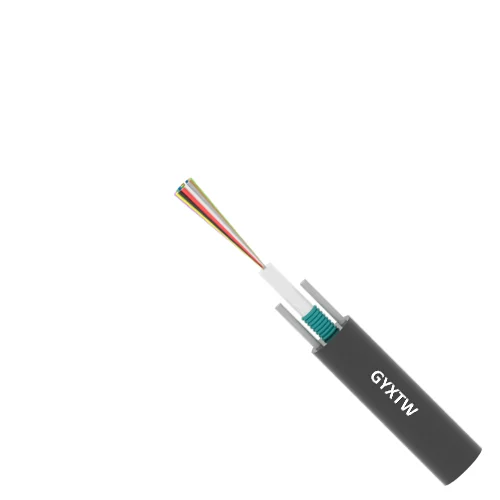
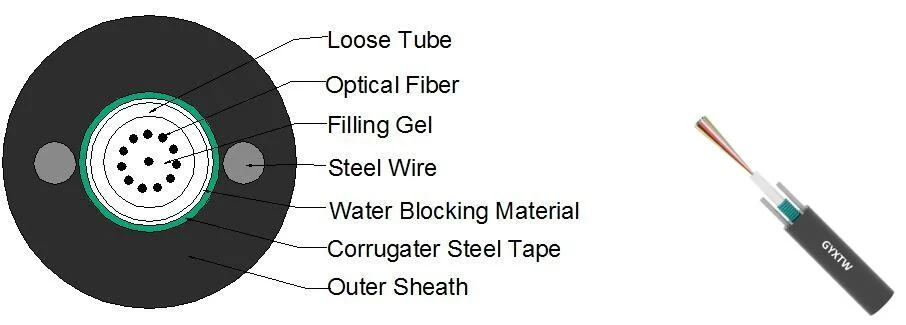
GYXTW is a central loose-tube, light-armored outdoor cable designed for aerial routes and short duct sections. A typical design includes:
- A PBT loose tube in the center, filled with water-blocking gel and loaded with the required number of fibers
- A water-blocking layer around the tube to prevent longitudinal water migration
- Corrugated steel or aluminum tape armor surrounding the core
- Two parallel steel wires as strength members
- An MDPE outer sheath for weather and UV resistance
This combination gives the cable three things that matter most outdoors: mechanical strength, environmental protection and predictable lifespan.
Real-World Benefits for Network Owners
1. Protection Against Rodents and Moisture
In many rural and semi-urban routes, rodents are a bigger threat than anyone likes to admit. Non-armored outdoor cables often show chew marks after a few years in service.
With GYXTW, the cable core is wrapped in corrugated metal tape and backed by gel-filled loose tube + water-blocking materials. Even if the outer sheath is cut, water and rodents still have to fight through extra barriers before they can reach the fibers. This significantly reduces the risk of fiber breaks and water ingress along the route.
2. Strength for Aerial Tension and Spans
The two steel strength members bear the main tensile load during installation and long-term operation. Properly designed GYXTW can:
- Handle pulling tension when the cable is installed on poles or through short ducts
- Maintain safe sag between poles under wind and ice load
- Protect fibers from excessive strain when spans are longer or terrain is uneven
For ISPs and utilities, this means fewer worries about “mysterious” attenuation changes caused by tension or micro-bending after a few winters.
3. Stable Performance in Harsh Weather
The MDPE outer jacket and armored structure give GYXTW good resistance to:
- UV radiation over many years of sunlight
- Rain, humidity and temperature changes
- Normal chemicals encountered in industrial and roadside environments
This makes the cable suitable for backbone routes along highways, power lines, railways, pipelines and industrial zones, where conditions can be tough and access for maintenance is limited.
4. Compact Size and Easy Handling
Despite the armor and steel strength members, GYXTW remains relatively slim and light for its robustness. Installers benefit from:
- Easier handling on site and on the pole
- Compatibility with common aerial clamps and hardware
- The option to use the same cable for short underground or duct segments where required
This flexibility helps contractors reduce the number of different cable types they need to manage in a single project.
Where GYXTW Fits in Your Network Design
GYXTW is often compared with ADSS, figure-8 and non-armored outdoor cables. It is especially attractive in the following scenarios:
- Using existing poles and supports where a separate messenger or lashing system is already planned
- Routes with known rodent activity, where metal armor is strongly preferred
- Mixed installation (aerial + short duct + shallow burial) using one cable type
- Projects where lifetime cost and reliability matter more than just the lowest initial price
In other words, GYXTW is a practical option when you need a cable that behaves like a “workhorse” in the field: reliable, forgiving and not overly sensitive to small installation mistakes.
Information You Should Prepare Before Asking for a Quote
Sending a detailed inquiry helps you receive a proposal that really fits your project, not just a generic price list. Before contacting a manufacturer, try to prepare the following points.
1. Application and Route Overview
- Type of project: ISP backbone, FTTx distribution, utility communication, industrial network, CATV, etc.
- Installation method: aerial only, or a combination of aerial, duct and shallow burial
- Environment: coastal, desert, mountain, urban, rural, industrial, or a mix
2. Fiber and Cable Requirements
- Fiber count needed per cable (for example 4, 8, 12, 24 cores)
- Fiber type (G.652D, G.655D, or multimode such as OM1 / OM2)
- Any requirement for specific fiber brands or standards
3. Mechanical and Environmental Conditions
- Total route length and typical span length between poles
- Expected maximum tension or known design constraints
- Minimum bending radius at poles, brackets or manholes
- Operating temperature range at your site
- Known issues such as rodents, termites, birds or heavy ice and wind
4. Standards, Certificates and Logistics
- Required certificates (e.g. ISO, CE, RoHS, local approvals)
- Preferred drum length (for example 2–4 km per drum)
- Total quantity and acceptable minimum order
- Special requirements for printing, packaging and labels
With this information, the engineering team can quickly confirm whether a standard GYXTW design is sufficient or whether a customized structure is needed.
Example of a High-Quality Inquiry
Instead of a short message like “Need GYXTW, best price please”, consider sending a more complete inquiry such as:
“We are building a 40 km aerial route along existing LV power poles in a rural area.
Required cable: GYXTW, 24 cores, single-mode G.652D.
Environment: -25 °C to +40 °C, rodents present, occasional ice and strong wind.
Please recommend a suitable structure, tensile rating and maximum span length.
Quote for 43 km (40 km route + reserve), packed on wooden drums with approx. 3 km per drum, including requested certificates.”
This kind of message allows the manufacturer to come back with:
- The most suitable GYXTW design for your conditions
- Technical data sheet and construction drawing for your documentation
- A clear price and lead time
- Optional suggestions on accessories and installation
The result is a more professional comparison between suppliers and fewer surprises once the cable is delivered.
Turning GYXTW Into a Long-Term Asset, Not a Cost
When aerial projects fail, it is almost never because the cable was 3–5% more expensive. Problems usually appear because the selected structure was too weak, not well matched to the environment, or installed at the limit of its mechanical capacity.
A properly specified GYXTW aerial armored cable:
- Survives harsh weather and rodent attacks
- Keeps fiber attenuation stable year after year
- Reduces unplanned outages and emergency repairs
- Protects your investment in network electronics and customer connections
For ISPs, utilities and industrial users who think beyond the next quarter, this is what really defines value in an outdoor fiber project.