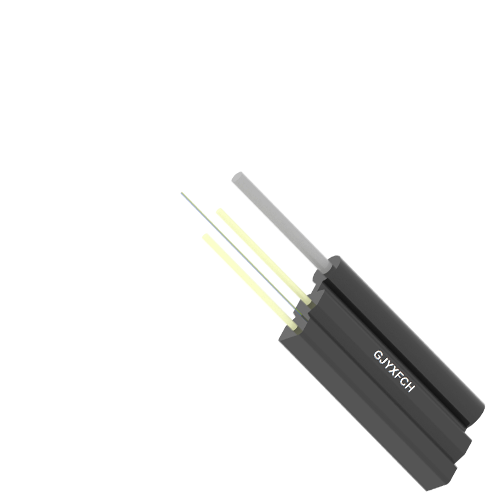


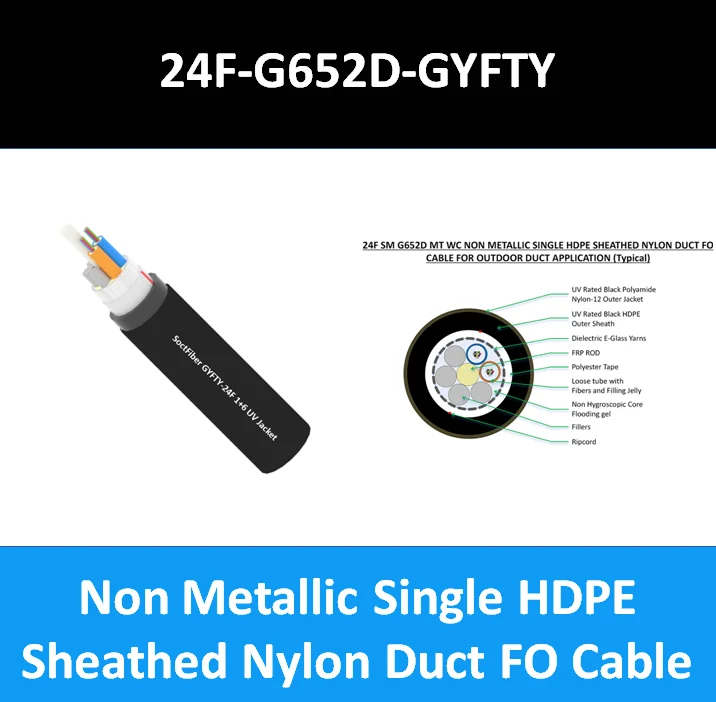
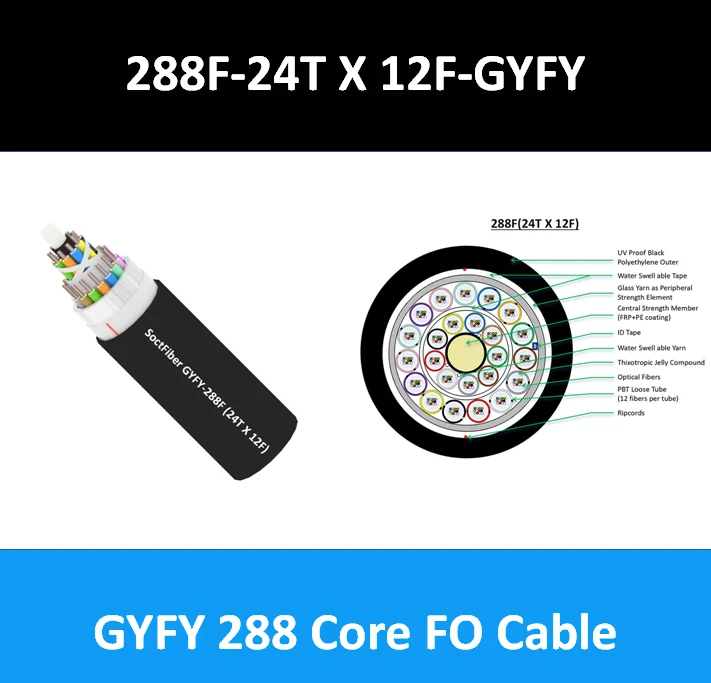

APC (Angled Physical Contact) connectors provide excellent return loss performance — typically better than –60 dB, far superior to UPC (Ultra Physical Contact) connectors, which usually achieve better than –50 dB. In applications where signal integrity is critical, APC is the undisputed winner.
However, not all fiber optic connectors are APC. The main reasons are as follows:
1. Application Determines the Requirement (Most Important Factor)
Where APC Is Essential: Applications Sensitive to Optical Reflections
- FTTH (Fiber to the Home):
In PON (Passive Optical Network) systems, a large number of optical splitters greatly attenuate the signal power. Even minor back reflections can mix with upstream signals, causing interference or even complete network failure. Therefore, from the OLT (Optical Line Terminal) at the central office to the ONU (Optical Network Unit) at the customer premises, APC connectors are mandatory to minimize back reflection. - CATV RF Optical Transmission:
In analog RF-over-fiber systems, reflections can cause nonlinear distortions such as Composite Second-Order (CSO) and Composite Triple Beat (CTB) distortions. These manifest as snow, ghosts, or image distortion on TV screens. For this reason, APC connectors are the only viable option. - High-Speed Coherent Optical Communication:
For 100G/400G and beyond coherent transmission systems using advanced modulation formats, even minute reflections degrade the signal-to-noise ratio (SNR) and can interfere with the local oscillator. APC connectors help ensure optimal system performance.
Where UPC Is Sufficient: Applications Less Sensitive to Reflection
- Data Centers:
Links between servers and switches are typically short-distance, with sufficient optical power budget. Reflections have negligible effects, so UPC connectors are perfectly adequate. - Enterprise Networks & LANs:
Most digital transmission systems tolerate small reflections as long as they stay within the receiver’s dynamic range. With return loss better than –50 dB, UPC connectors meet these requirements easily.

2. Cost and Manufacturing Complexity
- Production Difficulty:
APC connectors require the ferrule endface to be polished at an 8° angle, a more complex and precision-demanding process compared to the flat polish used for UPC. This results in higher manufacturing costs. - Connector Structure:
To achieve precise angular alignment, APC connectors use specific keying and sleeve designs to prevent mismating. This adds to their mechanical complexity.
3. Compatibility and Interchangeability
- Strict Prohibition of Mixing:
APC connectors must never be mated with UPC connectors. The angled endface prevents proper physical contact, leaving an air gap that causes extremely high insertion loss and severe reflections. Direct glass-to-glass contact may even damage the connector endface permanently. - UPC as the Industry Default:
UPC connectors have become the de facto industry standard, with a vast installed base across data centers and enterprise networks. Switching the entire ecosystem to APC would cause enormous compatibility and cost issues.
4. Cleaning and Maintenance
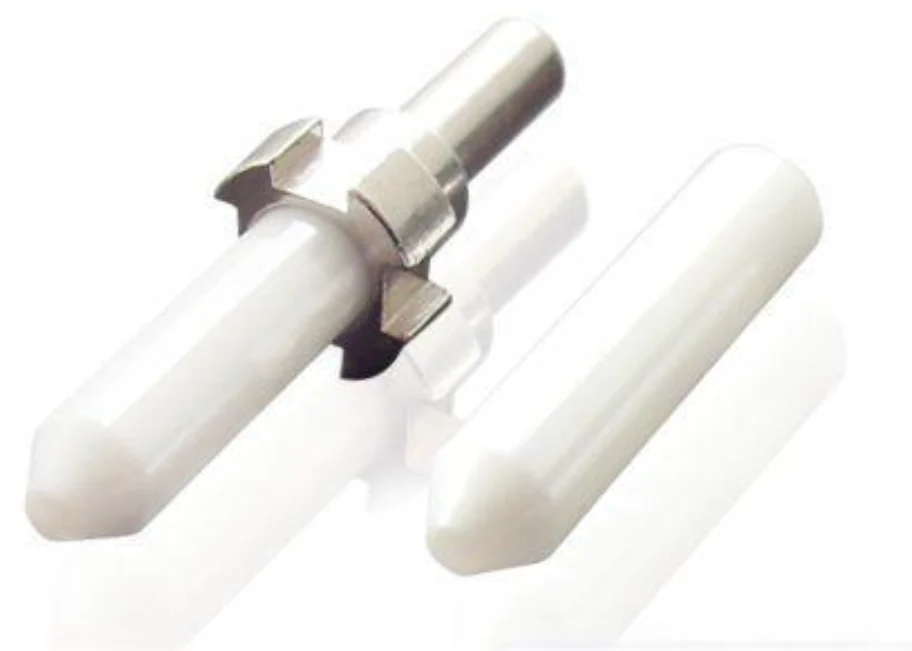
The angled endface of APC connectors makes visual inspection more challenging, as reflected light does not return directly to the viewer’s line of sight. Contamination or scratches are thus harder to detect without specialized inspection tools or trained technicians.
| Feature | UPC (Ultra Physical Contact) | APC (Angled Physical Contact) |
|---|---|---|
| Endface Geometry | Spherical endface (flat polish) | 8° angled endface |
| Return Loss | High (typically >50 dB) | Excellent (typically >60 dB) |
| Main Applications | Data centers, enterprise networks, and general digital communication systems | FTTH, CATV, and high-speed coherent optical communication systems sensitive to back reflection |
| Cost | Lower | Higher |
| Compatibility | Compatible with PC/UPC connectors; not compatible with APC | Compatible only with APC; not compatible with PC/UPC |
| Color Code | Blue (standard) | Green |
5.Conclusion
In fiber optics, “the best performance” does not always mean “the most practical solution.”
APC and UPC represent two optimized designs for different applications:
- When back reflection can critically impact system performance, APC is worth the added cost and complexity.
- In most digital or short-reach systems, UPC provides a more economical, compatible, and practical solution.
This application-driven engineering choice reflects the wisdom of optical network design — optimizing performance where needed, while balancing cost and practicality elsewhere.