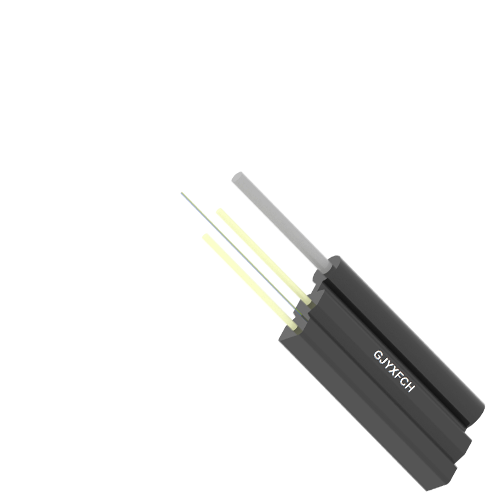

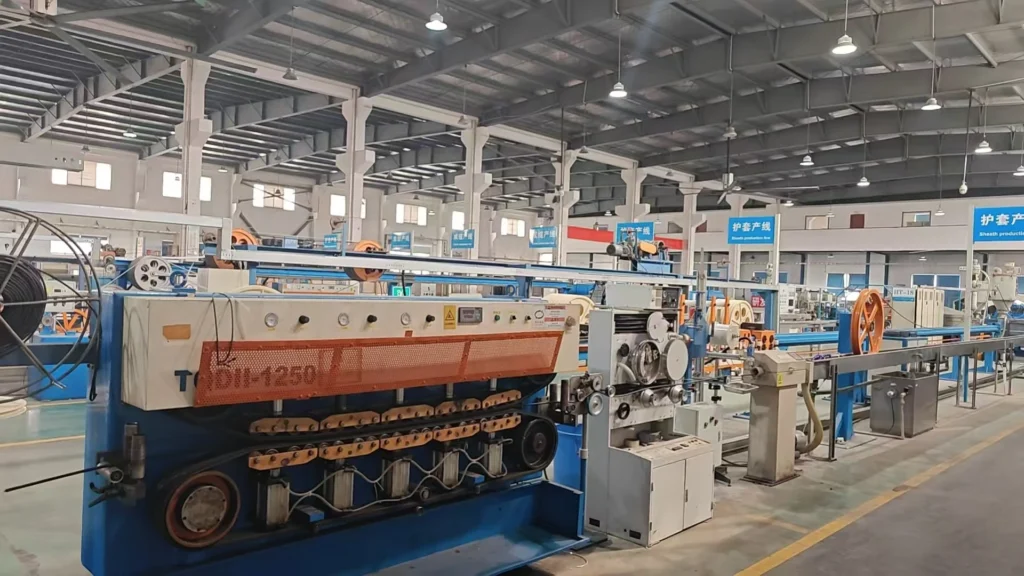

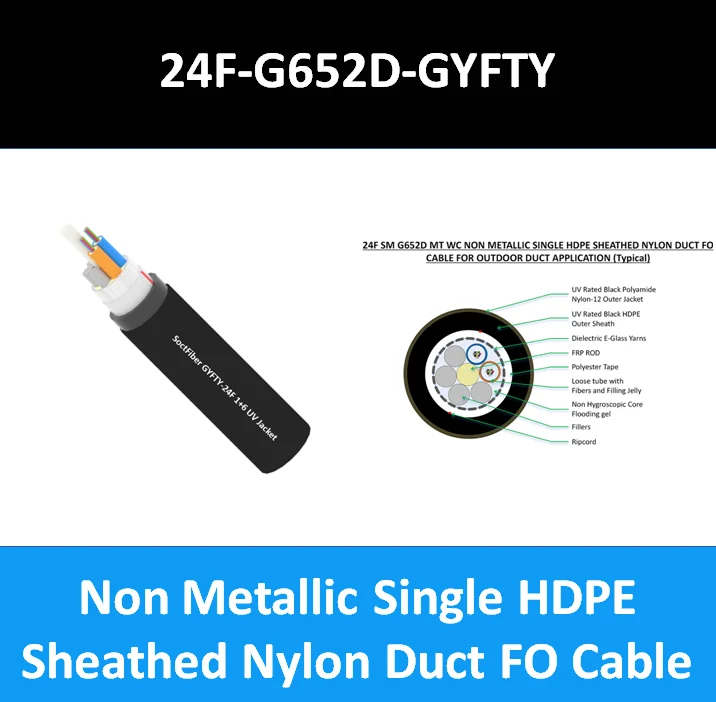
In 2026, with the continued rollout of 5G/6G backhaul, data center interconnections, metro backbone expansions, and smart city projects, demand for high-capacity 288 core fiber optic cable remains strong. The non-metallic duct GYFY 288 core cable (all-dielectric, loose tube design) is a popular choice for underground/duct installations where lightning protection, EMI immunity, and long-term reliability are critical.
However, procurement managers and network engineers often face challenges: inflated quotes, substandard materials, fake fibers labeled as G.652D, and unclear MOQ requirements. This guide provides practical, up-to-date insights to help you make informed decisions and secure the best value for your next 288 core single mode duct cable project.

1. Key Specifications You Must Verify (GYFY 288 Core Non-Metallic Duct Cable)
Always request the full datasheet and third-party test reports. Here’s a typical high-quality spec set for GYFY 288 core fiber optic cable (based on standard industry products like the multi-loose tube non-metallic design):
- Fiber Type: Single-mode G.652D (preferred for long-haul & backbone)
- Fiber Count: 288 cores (usually 12 tubes × 24 fibers)
- Cable Diameter: ≈21.6 ± 0.5 mm
- Cable Weight: ≈369 kg/km
- Central Strength Member: FRP (non-metallic)
- Water-blocking: Glass yarn + water-swellable materials (full dry or gel-filled options)
- Outer Sheath: Black MDPE (medium-density polyethylene), UV-resistant
- Attenuation (critical for long-distance transmission):
- ≤0.35 dB/km at 1310 nm
- ≤0.21 dB/km at 1550 nm
- Mechanical Performance:
- Short-term tensile: ≥3000 N (no added attenuation >0.1 dB)
- Crush resistance: ≥2000 N/100 mm
- Bend radius: Static 10× diameter, Dynamic 15× diameter
- Temperature Range: -30°C to +70°C
- Standards Compliance: IEC 60794, ITU-T G.652D, YD/T 901, Telcordia GR-20, etc.
Tip: Insist on seeing fiber attenuation test certificates from the fiber supplier . Fake G.652D fibers often show higher attenuation (>0.40 dB/km at 1310 nm).
2. Realistic Price Ranges for 288 Core Duct Fiber Optic Cable (2025-2026)
Prices fluctuate based on raw material costs (fiber + PE), USD/CNY exchange rate, order volume, and customization.
- Wholesale bulk price (international market): $4.5 – $8.5 per meter (≈ $4500 – $8500 per km)
- High-end (premium fiber + strict QC): $7–$8.5/m
- Standard Chinese manufacturers: $4.5–$6.5/m for large orders
- For reference: High-strand-count backbone cables (288f) for duct installation can reach $6+ per foot (~$19–$20/m) in retail/small orders in some Western markets, but bulk direct-from-manufacturer pricing is significantly lower.
Note: These are approximate 2025-2026 ranges. Always get fresh quotations — prices can vary 20-30% depending on fiber brand and lead time.
3. Factors That Influence the Final Quotation
- Fiber brand and quality (Corning/YOFC premium vs generic)
- Customization (color coding, special water-blocking, printing)
- Order volume — larger orders get better pricing
- Freight & packaging (wooden drums vs iron)
- Certification/testing requirements (extra cost for third-party)
- Payment terms & delivery time (urgent = higher price)
Pro tip: A 30 km order often unlocks the best unit price tier. Compare at least 3-5 suppliers.
4. MOQ (Minimum Order Quantity) Reality Check
Most professional manufacturers set MOQ for 288 core non-metallic duct cable at 20–30 km per order (due to production setup and drum sizes). Some flexible suppliers accept 10-15 km for repeat customers, but below 10 km is rare and usually priced much higher.
If you’re testing or running a small pilot, negotiate for samples (typically 1-2 km) or start with lower core counts.

5. How to Avoid Common Pitfalls: Spotting Fake or Substandard G.652D Fiber
Counterfeit or downgraded fiber is one of the biggest risks in high capacity 288 fiber backbone cable procurement. Common issues include:
- Fake G.652D: Actually lower-grade G.652A/B or multimode relabeled — results in higher attenuation (>0.4 dB/km), poor splice loss, and signal failure over distance.
- Substandard attenuation & dispersion — Fails long-haul transmission.
- Poor water-blocking — Leads to moisture ingress and fiber breakage.
- Weak mechanical strength — Cable crushes or snaps during duct pulling.
How to protect yourself:
- Request original fiber reel labels + OTDR/attenuation test reports from fiber manufacturer.
- Choose suppliers with ISO9001, TLC, CE, ROHS certifications.
- Ask for sample testing before bulk order.
- Avoid suspiciously low prices (below $4/m for 288 core is a red flag).
6. Supplier Selection Checklist for 288 Core Non-Metallic Fiber Cable
- Production capacity >10,000 km/year
- Export experience (to your region)
- Fast lead time (4-8 weeks for standard)
- Clear warranty (15-25 years)
- Responsive sales team with English support
Ready to get a competitive quote for GYFY 288 core non-metallic optical cable or high capacity 288 fiber duct cable?
Contact us today for a free quotation, sample discussion, or full technical datasheet. We specialize in reliable non-metallic duct cables for telecom backbone, metro networks, and data center projects — with strict quality control and competitive pricing.
Get Your Quote Now → Fill the form below or email us directly. Fast response within 24 hours!